AI didn't reduce my workload. It changed what I work on.
 Sevinj AliyevaMay 13, 2026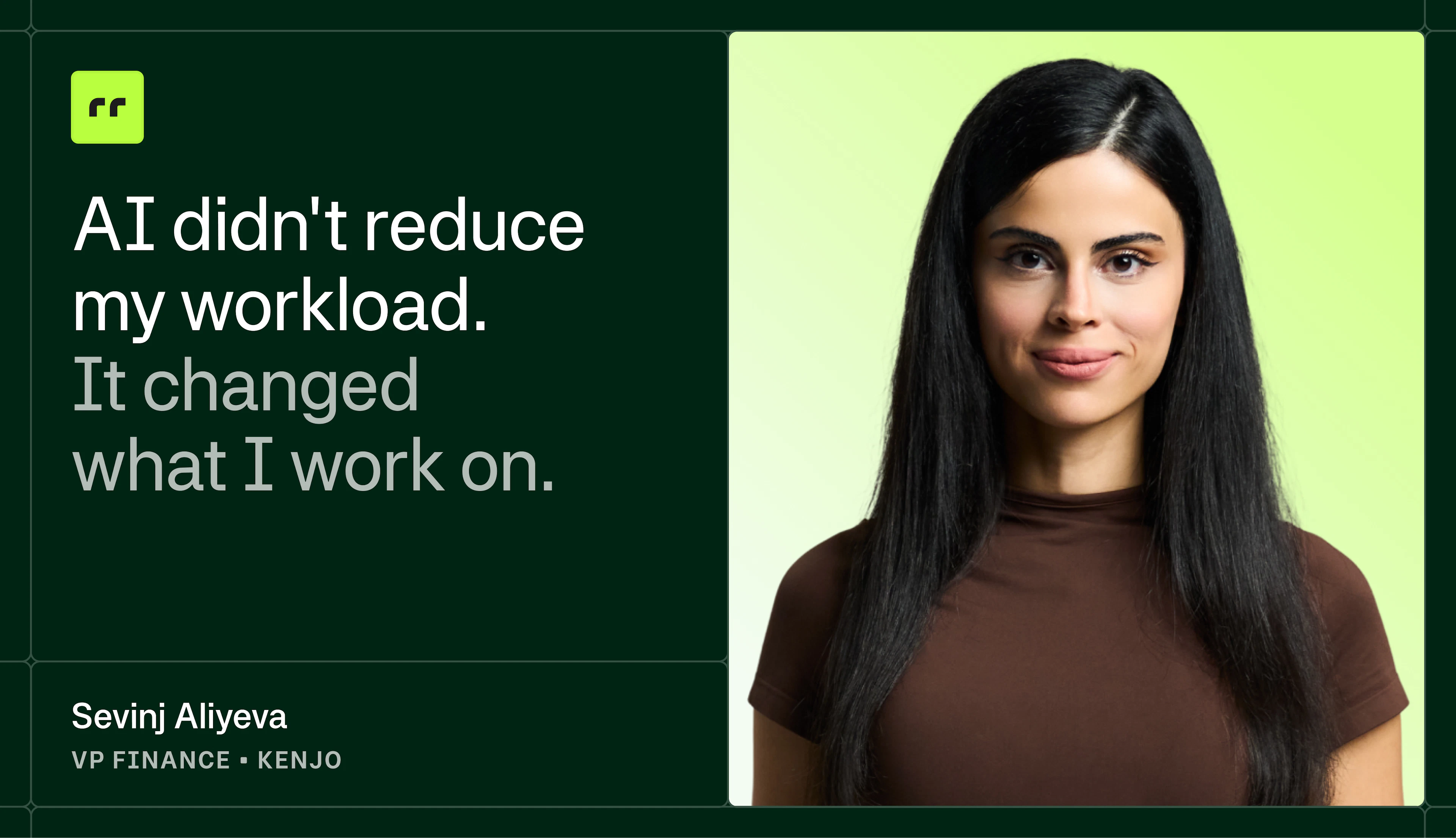
Last week, Moss brought together over 300 finance leaders from across Europe for a webinar on AI in finance. Not the hype version, not the headlines, but the honest, practical, sometimes uncomfortable reality. What's working. Where teams are stuck. And what it actually feels like when AI starts to change not just how fast you work, but what you work on.
I hosted the session alongside Ante Spittler, CEO of Moss, and Thomas Schenkelberg, a fractional CFO who has worked with finance teams across dozens of companies. Between us, we covered the full picture: strategy, infrastructure, and the day-to-day reality of teams trying to figure this out.
Here's what stayed with me.
Why micro-steps matter more than you think
Thomas opened with a story I think a lot of finance leaders will recognise. Last summer he spent over 100 hours trying to automate his financial reporting workflow using a vibe-coding tool. It failed. The tool couldn't process his export files. Workflows broke in ways he couldn't fix.
A year later, with Claude Code, he got 95% of his personal bookkeeping automated. Agents pull his bank statements, read his receipts, generate journal entries, and draft the email to his tax firm. What changed wasn't his ambition. The technology just finally caught up.
"I had too big of a vision and I failed with that. The lesson is: do small things, learn from them, and then move on to bigger things later." - Thomas Schenkelberg, Fractional CFO
This mirrors what I see in the finance teams I work with. The ones trying to solve everything at once, automate the full close, replace the entire reporting stack, almost always run into the same wall: governance and compliance requirements they hadn't accounted for, technical limitations of the models, or infrastructure that simply isn't ready. The ones who start with something boring and contained, drafting commentary, summarising a board pack into a one-pager, those are the teams that keep going. A small win makes the next use case so much easier to sell internally.
"Start small, get a win, and then compound from there." - Sevinj Aliyeva, VP Finance, Kenjo
Our audience poll confirmed it. Most attendees were still in the early stages, exploring AI or using it for isolated tasks. Almost nobody described it as genuinely changing how they lead. That gap between where most teams are and where the real value sits was exactly what the rest of the conversation was about.
Why end-to-end is still hard, and what's actually blocking it
Ante was direct about something that doesn't get said enough. The thing most finance teams want from AI, removing 70% of manual back-office work, is still largely out of reach. Not because the idea is wrong. The path there is just harder than the headlines suggest.
At Moss, a company of over 300 FTEs, the accounting team runs on four permanent staff and four working students. Day in, day out they are coding transactions, making ledger entries, closing the books. Ante wants to get that team 70% more effective with AI.
"The biggest disappointment in AI for finance is getting to real end-to-end impact. That is very, very tough." - Ante Spittler, CEO, Moss
The blockers Ante describes aren't what most people expect. It's not the AI models. It's governance. Audit trails. Approval flows. The ability to revert a change when something goes wrong. Ledger entries need to be right with very high confidence, not 80%, not 90%, but consistently high enough that an auditor can stand behind them. That's a different standard than most AI tools are built to meet.
"What the market needs is a properly governed, end-to-end finance-focused AI product. One where many things work off the shelf: reliable, auditable, and traceable." - Ante Spittler, CEO, Moss
Ante also made a point about the market I think is worth sitting with. Most of what gets labelled AI in finance right now is a single-point agent, a receipt fetcher, an anomaly detector, a categorisation tool. Useful, yes. But it's not the holistic, end-to-end platform the market actually needs.
Part of the answer is choosing the right foundation. Tools like Moss are interesting here precisely because they're built around the things that make AI actually work in finance: structured data, governed approval flows, and auditable processes. Getting that layer right means the AI you build on top of it has something solid to work with.
What the real shift feels like from the inside
Near the end of the session, someone in the audience asked a question that stopped the conversation: Did AI actually reduce your workload?
My honest answer was no.
Not because AI hasn't made individual tasks faster. It has, dramatically. But the time I saved didn't become rest. It became capacity. And capacity, for a finance leader, doesn't sit idle. It gets filled with the things that were always on the list but never made it to the top. Scenarios that used to take two weeks now take an afternoon. Analyses that used to get pushed to next quarter happen this week. Conversations with the board I never had time to properly prepare for, now I do.
"AI didn't reduce my workload. It changed what I work on. I'm just bringing forward conversations that used to get pushed to next quarter, because now there's actually capacity to have them." - Sevinj Aliyeva, VP Finance, Kenjo
This is the shift most people underestimate. We talk about AI in finance as a productivity story. Save hours. Reduce errors. Move faster. All of that is real. But the more interesting story, the one with the bigger long-term impact on what finance teams are actually for, is what happens when the capacity constraint is removed.
Ante described it through something Moss built internally. An agent that analyses the drivers of average contract value, a metric with dozens of input factors across sales, product, channels, and customer segments. Something that used to take a data analyst a week, with output that was rarely fully clear. The agent now does it continuously and can be pushed not just to show trends but to suggest what to prioritise. That's the shift from insight creation to decision support.
It's a compelling example of what becomes possible when the infrastructure is right. But I've noticed that the teams who actually get there, who move from automation to real decision support, tend to have something else going for them beyond the tools. It comes down to who's in the room.
"The skills I always looked for haven't changed — passion for the domain, curiosity, technical comfort, a builder mindset. What changed is that AI now massively amplifies what those people can produce." - Thomas Schenkelberg, Fractional CFO
Which brings me to the question about what the CFO role looks like in three years. Ante's framing was the most memorable. RIP to back-office processes, RIP to dispersed tools, RIP to building and extending Excel models as the primary way finance communicates. What replaces it is a role closer to the CEO, one that owns the systems and data flows rather than depending on IT, and that focuses on improving the business rather than just reporting on it.
I don't think that happens by default. It requires finance leaders willing to get uncomfortable. To learn the language of AI, rebuild workflows rather than just layer new tools on top of old ones, and genuinely let go of the activities that used to fill most of their week.
Three things to take away
The teams that will get the most from AI aren't the ones who automate the most tasks. They are the ones who use that freed-up capacity to do something different with it. To show up to the board with a perspective instead of a report. To run the scenario that always got deprioritised. To finally have the conversation that kept getting pushed to next quarter.
That's the shift from efficiency to strategy. And it doesn't happen automatically. It's a choice.
We closed with three takeaways that still feel right to me.
1. Start with clean infrastructure. AI won't fix messy data or unclear processes. It amplifies them. Get the foundations right first, and if you're looking for a place to start, tools like Moss are built precisely around this: governed, auditable processes and clean data you can actually build on.
2. The goal is clarity, not speed. The teams pulling ahead aren't the fastest adopters. They're the ones who can now see things they couldn't see before, and have conversations with leadership that simply weren't possible before.
3. Thoughtful beats aggressive. The finance teams winning with AI aren't the ones moving fastest. They're the ones moving most deliberately, with clear use cases, clear ownership, and a clear sense of what they're trying to achieve.
If you missed the webinar, the recording is available on the Moss Events Hub.